
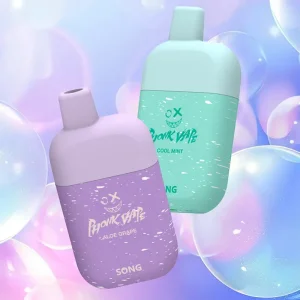
The global electronic nicotine delivery systems (ENDS) market has undergone a fundamental architectural shift. The market trajectory is no longer driven solely by basic e-liquid vaporization; today's high-capacity disposable vapes rely on advanced micro-engineering, dual-mesh heating arrays, real-time power modulation, and dynamic user interface displays. Popularized by flagship market benchmarks like the Geek Bar Pulse, Geek Bar Digiflavor, and SONG Series, modern disposable vapes represent complex, integrated electronic devices requiring tight synergy between micro-circuitry, battery electrochemistry, and e-liquid chemistry.
For global importers, regional distributors, and brand owners searching for a certified discount Geek Bar review supplier and direct factory partner, success relies on understanding both market trends and engineering technicalities. Bulk purchasing decisions can no longer be based solely on price per unit. B2B procurement leaders must evaluate coil resistance consistency, thermal dispersion coefficients, battery degradation curves under high-draw pulse modes, and regulatory compliance frameworks across international jurisdictions.
To understand why the Geek Bar form factor and operational logic dominate global retail shelves, we must analyze the internal component architecture that sets high-puff devices apart from legacy single-coil vapes. When reviewing top-tier disposable devices, four distinct engineering pillars define market leadership:
Traditional disposables utilized a single wire or single mesh heating structure ranging between 1.2Ω and 1.5Ω. Modern architectures implement dual mesh coils operating in parallel or alternating configurations (0.6Ω to 1.0Ω). In Pulse/Boost Mode, both coils fire simultaneously to double vapor density and instant flavor delivery without scorching the cotton core. In standard mode, the chipset alternates power between the two coils, extending coil life and preserving flavor stability across 15,000+ puffs.
Behind the responsive dynamic screen lies an advanced Microcontroller Unit (MCU) combined with a customized Vapor Processing Unit (VPU). This processing unit calculates puff duration real-time, monitors remaining e-liquid volume via algorithmic usage modeling, controls battery discharge curves, and provides crucial thermal protection cutoffs to prevent dry hits.
Consumer expectations have moved past simple single-LED bottom indicators. High-end disposable platforms feature multi-color curved screens, real-time battery percentages, digital oil level indicators, and high-tech cosmic or geometric UI animations. This user experience elevates perceived retail value and drives brand loyalty.
| Specification Parameter | Standard Mode Configuration | Boost / Pulse Mode Configuration | Factory Technical Tolerance |
|---|---|---|---|
| Heating Resistance | 1.0 Ω (Single Coil Active) | 0.6 Ω (Dual Parallel Firing) | ± 0.05 Ω precision |
| Output Wattage | 11W - 13W Constant | 22W - 25W Peak Pulse | Dynamic Voltage Regulation |
| Airflow Configuration | Tight MTL (Mouth-To-Lung) | Restricted DTL (Direct-To-Lung) | Dual-Slot Adjustable Valve |
| Battery Architecture | 650mAh Pure Cobalt Lithium-ion | 650mAh Pure Cobalt Lithium-ion | Grade-A, 500+ Recharge Cycles |
| E-Liquid Reservoir | 16ml - 28ml High-Purity Storage | 16ml - 28ml High-Purity Storage | Multi-Layer Leakproof Sponge Core |
Over 90% of the world’s electronic cigarettes are designed, manufactured, and assembled in Shenzhen, China, primarily concentrated within the Bao’an district industrial clusters. Sourcing high-puff disposables like Geek Bar alternatives or proprietary platforms (such as the SONG Pro, SONG Y193C, and SONG A-Series) directly from qualified China factories grants international buyers distinct operational and financial advantages.
By eliminating multiple layers of regional importers, master brokers, and domestic trading agents, factory-direct purchasing cuts unit costs by 35% to 60%. This expanded margin allows brand owners to reinvest heavily in localized marketing or offer aggressive wholesale pricing to retail networks.
Tier-1 Chinese factories house fully equipped molecular synthesis and flavor profiling laboratories. Utilizing high-performance liquid chromatography (HPLC) and gas chromatography-mass spectrometry (GC-MS), in-house chemists adjust sweetener degradation curves, cooling agent ratios (WS-23), and nicotine salt smoothness to match regional palates.
Modern factories utilize automated Surface Mount Technology (SMT) for PCB chip placement, laser welding for battery wire contact points, and automatic pneumatic liquid filling machines. This reduces human touchpoints, minimizes variance, and maintains tight quality standards.
Leading manufacturers operate under cGMP, ISO 9001 quality management, ISO 14001 environmental standards, and ISO 13485 medical device systems. Cleanroom environments certified to ISO Class 7 ensure zero airborne particulates contaminate e-liquid reservoirs during assembly.
Building a multi-million-dollar vape brand or securing stable discount supply for wholesale distribution requires a structured, end-to-end operational roadmap. SONG Technology provides global enterprise partners with transparent product development, from concept to retail delivery:
Clients select target chassis dimensions, puff targets (e.g., 600 puffs TPD compliant vs 10,000+ to 25,000 puffs open market), screen interface design (LED icons vs full TFT curved animations), and battery capacity specs. Custom shell molds (ID design) can be sculpted within 14 business days.
Select from established flavor databases—such as Watermelon Ice, Cool Mint, Aloe Grape, Blueberry Razz, and Sour Apple—or work with flavor chemists to engineer custom signatures. Nicotine formulation options include Synthetic Nicotine Salts (20mg/ml, 30mg/ml, 50mg/ml) and zero-nicotine bases.
Pre-production functional samples undergo rigorous testing before mass production: automated puff simulation (vacuum testing), high-altitude negative pressure simulation (preventing air-freight leakage), thermal shock exposure (-20°C to 60°C), and drop impact verification.
A reliable factory supplier assists with regional compliance needs. This includes producing chemical MSDS sheets, TPD notification dossiers for the EU/UK, CE/RoHS certification testing, UN38.3 transport security docs for lithium batteries, and supporting documentation for US FDA PMTA filings.
Upon sample sign-off, automated lines begin component SMT, e-liquid injection, battery assembly, ultrasonic shell welding, and retail blister packaging. Quality assurance protocols perform batch sampling at a strict AQL 0.65 Level II standard.
Navigating international shipping regulations for hazardous materials (batteries and e-liquid) requires expertise. Established factory logistics partners handle DDP (Delivered Duty Paid), air transport charters, sea freight forwarding, and local customs clearing seamlessly.
Success in the global vapor industry requires matching product hardware and e-liquid formulations to regional legal frameworks and local consumer preferences. One single product design cannot serve all markets globally.
Legal Constraints: Maximum 2.0ml e-liquid capacity, max 20mg/ml (2%) nicotine concentration, mandatory child-resistant packaging, and EU CEG notification 6 months prior to commercial launch.
Winning Strategy: Focus on high-efficiency 600 to 800 puff devices utilizing advanced 1.2Ω mesh coils that maximize flavor saturation within strict 2.0ml fill limits. Alternatively, deploy TPD-compliant 10ml refill container systems or modular removable battery designs.
Legal Constraints: FDA Premarket Tobacco Product Application (PMTA) requirements, state-level flavor restrictions, and rigorous synthetic nicotine oversight.
Winning Strategy: High-capacity devices ranging from 10,000 to 25,000 puffs featuring dual-mode wattage switching, bright dynamic LED/TFT displays, 50mg/ml (5%) nicotine strength, and robust anti-counterfeiting verification labels.
Legal Constraints: UAE Ministry of Industry & Advanced Technology compliance, mandatory tax stamp tracking, and specific packaging health warning layouts.
Winning Strategy: High-puff, premium metal-finished devices with bold, high-sweetness profiles (e.g., Double Apple, Mango Ice, Mint Thrills) packaged in luxury metallic boxes.
As the disposable e-cigarette industry matures, regulatory pressures and evolving consumer preferences are driving rapid innovation across four main technological fronts:
Environmental concerns regarding non-recyclable lithium batteries in disposable devices are prompting manufacturers to transition toward modular designs. Next-gen platforms feature detachable, reusable power banks with low-cost disposable pod cartridges, reducing electronic waste by over 70%.
Integration of Bluetooth micro-modules enables smartphones to connect with vaping hardware. Users gain access to precise usage tracking, child-lock geofencing, custom power curves, and device tracking features.
To complement vaping, major manufacturers are expanding into tobacco-free oral nicotine pouches (such as the FreshBurst Nicotine Gum & Pouch Series). Providing distributors with a combined product portfolio allows them to capture revenue across diverse smoke-free consumer segments.
Future disposable devices are moving away from simple fixed-voltage output toward dynamic temperature sensing algorithms. By detecting dry spots before combustion occurs, thermal control prevents aldehyde generation and extends coil lifespan.