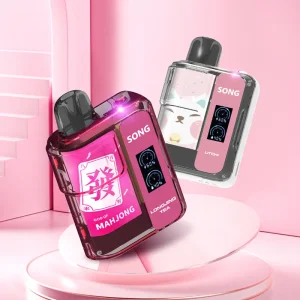
Explore our factory-direct OEM/ODM products engineered for extreme power efficiency, consistent safety compliance, and rapid consumer adoption across global markets.




Analyzing global market dynamics, the transition to Universal Type-C PD architecture, eco-sustainability mandates, and intelligent battery management systems.
The electronic atomization industry has undergone a monumental shift over the past decade. Transitioning from rudimentary, single-use power architectures to high-performance, microchip-governed charging eco-systems, modern vape hardware demands unprecedented thermal efficiency, rapid power delivery, and rigorous safety fail-safes. As global regulatory bodies—such as the EU Tobacco Products Directive (TPD), the US FDA (PMTA), and international safety standardization groups (UL, CB, CE, RoHS)—enforce stringent compliance guidelines, the role of discount vape charger manufacturers & suppliers has transcended basic assembly. Today, it represents a high-stakes arena of embedded electronics engineering and supply chain agility.
Historically, the vape charging domain relied heavily on low-cost, proprietary 510-thread USB dongles plagued by fluctuating current inputs, elevated thermal degradation, and slow power transfer rates. However, modern consumer demand for multi-puff disposable vapes (ranging from 7,000 to over 20,000 puffs), pod systems, and modular advanced personal vaporizers (APVs) has necessitated the integration of high-density Lithium-ion/Lithium-polymer cells paired with fast-charging USB Type-C Power Delivery (PD) protocols and Smart Integrated Circuits (ICs).
At the center of contemporary vape battery charging architecture lies the Power Management IC (PMIC). Unlike traditional basic trickle-chargers, advanced PMICs dynamically regulate the constant-current/constant-voltage (CC/CV) charging profile required by high-discharge lithium-ion cells. By continuously sampling battery impedance, ambient thermal conditions, and real-time terminal voltage, smart vape chargers prevent lithium plating—a primary cause of internal micro-short circuits and capacity loss over repeated discharge cycles.
Key Engineering Insight: High-efficiency fast charging in modern vape devices relies on dynamic thermal throttling. When charging currents exceed 1.5A, the integrated NTC (Negative Temperature Coefficient) thermistor feedback loop automatically modulates current output, capping junction temperatures below 45°C to preserve cell lifespan and guarantee total user safety.
| Technical Specification | Legacy 510 Thread Chargers | Standard Type-C Fast Chargers | Next-Gen Smart IC Vape Chargers |
|---|---|---|---|
| Input Voltage / Current | 5V / 200mA - 420mA | 5V / 1A - 2A | 5V-9V / Up to 3A Smart PD |
| Charging Algorithm | Basic Linear Resistor | Standard CC/CV Loop | Multi-Stage Adaptive CC/CV + Trickle |
| Thermal Monitoring | None (Passive Heat Dissipation) | Basic Fuse Cutoff | Real-time Dual NTC Thermistor Protection |
| BMS Protection Suite | Overcharge Only | Overcharge, Short-Circuit | OVP, OCP, OTP, Reverse Polarity, Anti-Dry Burn |
| Energy Efficiency Ratio | < 65% | 78% - 85% | > 92% (Low Ripple & Noise) |
How Shenzhen & Dongguan industrial clusters achieve economies of scale, superior cost control, automated precision, and uncompromised quality assurance.
Within a 30-kilometer radius in the Pearl River Delta, raw material suppliers, SMT surface-mount processing plants, precision injection molding facilities, and testing labs operate in complete lockstep, minimizing lead times and transport overhead.
State-of-the-art High-Speed Surface Mount Technology (SMT) lines place micro-components with ±0.01mm accuracy, eliminating human error during high-density PCB assembly for vape charging modules and power regulation boards.
By leveraging bulk silicon wafer purchasing and localized passive component sourcing, top-tier Chinese factories offer "discount" pricing tiers while retaining 100% adherence to international safety certifications.
In B2B procurement, the word "discount" often raises concerns regarding potential quality compromises. However, in the context of China's top vape charger manufacturers, cost reductions stem from structural efficiency rather than engineering shortcuts:
Tailoring vape power delivery architectures to regional market demands, retail formats, and consumer usage patterns.
EU and UK markets strictly enforce environmental e-waste directives (WEEE) and hazardous substance limits (RoHS). Solutions include ultra-compact charging modules, detachable USB-C cables, and flame-retardant PC/ABS casings that pass 850°C glow-wire tests, ensuring easy market access and compliance with local retail laws.
North American adult consumers favor long-lasting, multi-puff disposable vapes and high-capacity pod systems requiring daily recharging. Factories supply heavy-duty 5V/2A and 9V fast-charging circuits equipped with reinforced zinc-alloy ports capable of withstanding over 10,000 insertion/extraction cycles.
For commercial venues and vape lounges, custom multi-port desktop charging hubs and magnetic dock arrays allow simultaneous charging of multiple devices with equalized power distribution, anti-surge filtering, and visual LED status monitoring.
Global distributors require unique branding footprints. Factories provide fully customizable shell textures (laser engraving, soft-touch matte, metallic anodization), custom LED indicator ring shapes, and bespoke retail packaging tailored for high-end shelf appeal.
A structured, step-by-step roadmap for B2B buyers, importers, and brand owners seeking custom vape charger manufacturing.
Definition of electrical specifications (voltage, target current, ripple limits), physical form factors, interface types (USB-C, micro-USB, magnetic pogo pin), and target regulatory standards.
Rapid 3D printing of enclosure prototypes, PCB layout routing, component sample sourcing, and initial engineering validation testing (EVT) under extreme thermal and electrical stress.
Submitting prototype units to accredited third-party laboratories (ITS, SGS, TÜV) for CE, FCC, RoHS, REACH, UL 2089, and UN38.3 lithium battery transport safety certifications.
High-volume SMT mounting, automated soldering, ultrasonic housing seal welding, and 100% aging tests where chargers undergo full charge/discharge cycling under load.
Acceptance Sampling according to MIL-STD-105E / ISO 2859-1 standards (AQL 0.65 Major / 1.0 Minor), custom palletization, and global door-to-door freight forwarding handling.
VMI (Vendor Managed Inventory) buffering, ongoing component cost-down engineering reviews, and agile firmware modifications based on field telematics feedback.
Demonstrating deep technical competence, rigorous testing protocols, and robust safety mechanisms that safeguard consumer brand trust.
In the vape hardware market, product safety directly dictates brand longevity. A single battery malfunction caused by an unregulated charging transient can trigger catastrophic product recalls and legal liabilities. Established discount vape charger suppliers institute multi-layered physical and digital hardware protection matrixes directly onto the charging board:
Power surges originating from faulty wall adapters or automotive power outlets pose a persistent threat. Built-in transient voltage suppressor (TVS) diodes absorb voltage spikes up to several kilovolts, clamping input lines down to safe operating levels before voltage reaches sensitive charge management microchips.
If debris, moisture, or metallic particles bridge the contact terminals of a vape charging port, the charging IC triggers a hardware latch-off state within 50 microseconds, isolating power flow until the short circuit fault is cleared.
When a vape battery drops below a critical threshold (e.g., <2.8V), applying full fast-charging current can destabilize internal chemistry. Smart chargers automatically enter a low-current trickle mode (50mA-100mA) to safely rehydrate the cell chemistry until cell voltage rises to 3.0V, at which point standard fast-charging resumes safely.
Charger housings are molded exclusively from UL94-V0 rated polycarbonate and ABS thermoplastic blends. In the unlikely event of an internal component overheating, the casing self-extinguishes within 10 seconds without dropping flaming particles.
Direct technical and operational answers to help buyers make informed decisions when partnering with Chinese vape charger manufacturers.
Expand your product catalog with our industry-proven, high-efficiency vape series engineered for global markets and maximum consumer satisfaction.