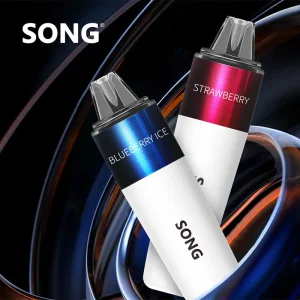
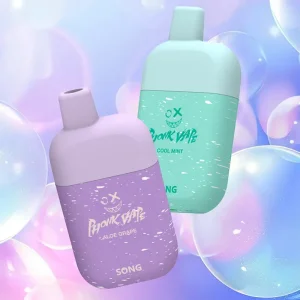
Explore our production-ready, highly configurable OEM/ODM hardware ranges engineered for max puff efficiency, instant activation, and pure flavor output.
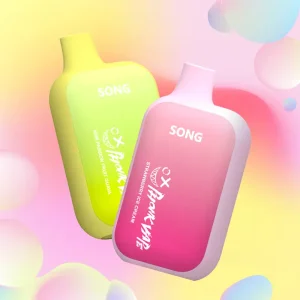
The global electronic atomization landscape has undergone a seismic technological shift over the past three years. Modern adult consumers and professional vape distributors no longer accept high device failure rates, burnt tastes, or leakage issues. Within the specialized sector of high-capacity compact devices—popularly designated in wholesale terminology under the broader category of "Cake Vape Pens"—manufacturing excellence requires an intricate convergence of high-purity ceramic material science, microchip-governed airflow dynamics, and automated precision assembly.
Originally popularized due to their ergonomic bar-shaped or palm-sized form factor, high thermal stability, and superior oil utilization rates, Cake-style vape devices have matured from simple entry-level hardware into complex All-In-One (AIO) vaping platforms. As premier Chinese OEM/ODM production clusters in Shenzhen and Dongguan refine their supply chains, international importers face both immense market opportunities and stringent regulatory hurdles.
To win market share in highly competitive regions across North America, Europe, the Middle East, and Latin America, global vape brand owners must partner with tier-1 factories that offer comprehensive ODM capabilities—from initial CAD structural design and rapid prototyping to customized e-liquid/oil viscosity matching, heavy-metal-free component sourcing, and international compliance certification (TPD, CE, RoHS, FCC).
The foundational superiority of leading OEM Cake vape pens resides within their internal atomization assembly. Transitioning away from legacy cotton-wrapped wire coils, modern high-performance devices rely on advanced porous ceramic heating elements engineered at the molecular level.
Engineered with a precise pore-size distribution of 10 to 15 microns, ensuring uniform capillary absorption without dry hits or flooding, regardless of ambient temperature variances.
Constructed using medical-grade PCTG food-contact tanks and central posts completely free of heavy metals (Lead < 5ppm), eliminating toxic leaching into high-terpene or high-VG formulations.
Integrated Microcontroller Units (MCU) deliver constant power output across battery depletion curves, preventing flavor degradation as battery voltage drops from 4.2V down to 3.2V.
OEM Technical Benchmark: Modern Cake Vape Pen platforms feature dual-air-path anti-clogging technology. By incorporating a secondary pre-heating air bypass pathway, high-viscosity distillates or dense e-liquids evaporate cleanly upon draw activation without requiring pre-heat button stalls or manual warm-ups.
When selecting a manufacturing partner for private-label Cake vape pen lines, procurement directors must evaluate technical parameters against industry standards:
| Engineering Attribute | Legacy Standard Hardware | Next-Gen OEM Cake Platform (SONG Specs) |
|---|---|---|
| Heating Element | Standard Cotton / Metallic Coil (1.4Ω) | Porous Micro-Ceramic Core (1.0Ω - 1.2Ω) |
| Oil/E-Liquid Reservoir | Standard Plastic / Polycarbonate | Medical Grade PCTG (BPA & Lead-Free) |
| Battery Cell Quality | Recycled Grade-B Lithium Ion | Pure Cobalt 13300/13450 High-Drain Pure Cells |
| Recharge Interface | Micro-USB (Slow Charging, Unregulated) | Type-C Fast Charge with Overvoltage Protection |
| Airflow Sensing Mechanism | Basic Mechanical Pressure Switch | Digital Solid-State Air Microphone Switch |
| Failure & Leakage Rate | 1.5% - 3.0% Industry Average | Strict Quality Controlled < 0.05% Batch Average |
A critical failure mode in vape manufacturing occurs when brand managers select off-the-shelf hardware without calibrating the heating element to their specific liquid viscosity. E-liquids vary drastically in physical density: high-VG nicotine salt formulations require distinct thermal profiles compared to balanced 50/50 PG/VG mixes or high-viscosity Botanical/Cannabinoid distillates.
For markets utilizing high-viscosity extracts, oil thickeners, or solventless live rosin formulations, standard vape pens quickly clog or burn out. Premium OEM Cake factories integrate specialized ceramic pore matrices with enlarged intake ports (1.6mm to 2.2mm intake hole diameters) and micro-impedance tuning to deliver efficient vaporization without degrading delicate terpene profiles.
Nicotine salt formulations require low thermal activation thresholds to prevent harsh throat hits and chemical breakdown of sweetening agents. Modern ODM production lines utilize custom-tuned wattage curves (ranging from 8W to 12.5W) powered by smart microchips to ensure smooth vapor extraction from the first puff down to the 7000+ puff limit.
Engineering capabilities spanning compact 2.0mL TPD-compliant units up to high-capacity 10mL - 18mL disposable monsters with rechargeability.
Access to in-house flavor laboratories capable of replicating signature confectionery, fruit fusion, menthol ice, and authentic tobacco profiles.
Custom industrial finishes including tactile rubberized UV coating, gradient metallic anodization, leather wrap overlays, and custom silkscreen/laser engraving.
Navigating international vape regulations requires expert supply chain governance. A failure in regulatory compliance can lead to costly border seizures, market bans, or brand liability. Leading China OEM suppliers provide full technical support documentation required by local regulatory bodies worldwide.
Exceptional hardware quality is not an accident; it is the direct outcome of a closed-loop quality assurance system implemented throughout every phase of production. To maintain a defect rate near zero across multi-million unit monthly runs, modern facilities implement a 5-Stage Quality Assurance Matrix:
100% inspection of battery cell capacity and internal resistance. Spectrometry testing of raw plastics and metals for lead, cadmium, and mercury contamination.
Automated visual inspection (AVI) on automated soldering and core insertion lines. Continuous check of e-liquid injection volume tolerances (±0.05g).
100% chamber pressure testing simulating high-altitude air transport pressure drops (-0.8 bar) to guarantee zero leakage during air freight shipping.
Controlled burn-in testing of completed circuit boards, automated draw activation validation, and high temperature/humidity environmental chamber testing.
Final random sampling inspection strictly adhering to AQL 0.65 Major / 1.0 Minor standards prior to master carton sealing and palette shrink-wrapping.
Laser engraving of unique batch tracking numbers on inner battery housings to provide complete component traceability from raw material to retail counter.
Expand your brand portfolio with market-proven device configurations, portable packs, and high-capacity battery powerhouses directly from certified factory lines.
Detailed technical and commercial answers for procurement managers, distributors, and vape brand owners evaluating OEM/ODM partnerships.
For standard catalog hardware with custom laser-etched branding or simple color shifts, baseline MOQs typically start at 1,000 to 3,000 units per flavor/colorway. For fully customized ODM projects—including custom injection-molded outer shells, bespoke battery capacities, specialized ceramic coil aperture sizes, and custom retail packaging boxes—the standard MOQ is 10,000 units per batch.
We incorporate dual air-path structural technology alongside tailored porous ceramic cores with variable pore diameters (ranging from 10µm to 15µm). Additionally, heating elements can be calibrated with low-resistance pre-heat circuits or customized voltage ramp-up curves controlled by internal microchip software, ensuring immediate oil saturation and vapor production even in colder climates.
All component parts that contact liquid or vapor pathways—including PCTG oil tanks, silicone seals, micro-porous ceramics, and central metal posts—are subjected to rigorous ICP-MS (Inductively Coupled Plasma Mass Spectrometry) testing. We guarantee compliance with California Proposition 65 and European TPD guidelines, maintaining Lead (Pb), Cadmium (Cd), Arsenic (As), and Mercury (Hg) levels strictly below 0.2 ppm.
Yes. We supply comprehensive technical dossiers to our wholesale clients, including full Material Safety Data Sheets (MSDS), UN38.3 lithium battery transport test reports, RoHS certificates, CE compliance documents, and TPD emission laboratory test analysis data (covering emissions of Diacetyl, Acetyl Propionyl, Heavy Metals, and Carbonyls).
Rapid pre-production sampling for standard hardware with custom flavor formulations requires 5 to 7 business days. Once golden samples and artwork proofs are signed off, standard mass production lead times run between 15 to 22 calendar days, depending on batch volume and custom packaging complexity. Air freight shipping typically adds 5-8 days door-to-door, while sea freight takes 25-35 days depending on destination port logistics.
While our factory defect rate is maintained strictly below 0.05% via automated end-of-line testing, all wholesale OEM contracts are backed by a 1-for-1 replacement guarantee for any verifiable hardware defect. Replacements are immediately credited toward your subsequent production order or dispatched via expedited air transport.