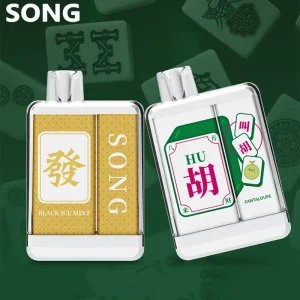
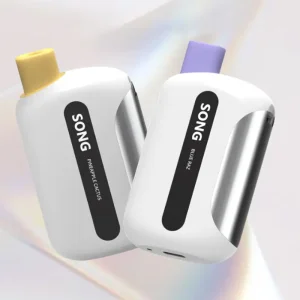
Industrial-grade, customizable unfilled disposable and pod systems ready for localized liquid filling and white-label deployment.
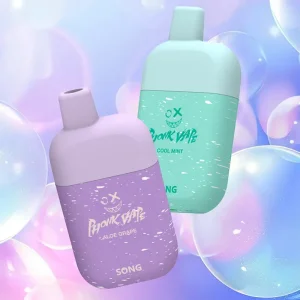
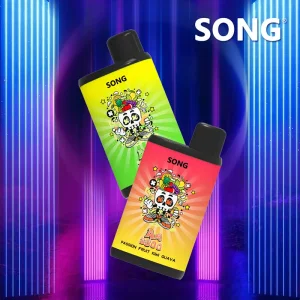

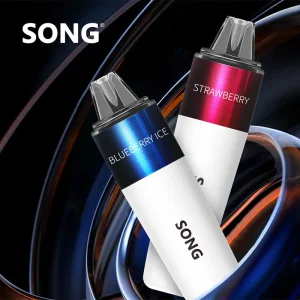


Analyzing why global e-liquid manufacturers, multi-state operators (MSOs), and brand owners are transitioning to fill-at-destination supply chain architectures.
Importing pre-filled electronic nicotine delivery systems (ENDS) subjects distributors to compounding excise taxes, stringent local health warnings, and regulatory roadblocks. Sourcing empty vape hardware allows brands to decouple hardware procurement from e-liquid formulation, drastically reducing customs duties, simplifying excise declarations, and streamlining international logistics compliance.
Pre-filled vapes suffer from core saturation degradation, flavor oxidation, and battery discharge during lengthy ocean freight transit. Sourcing empty hardware guarantees that e-liquid remains stored in optimal light-blocking, temperature-controlled stainless steel drums until localized automated filling occurs, delivering maximum terpene freshness and zero core clogging to the end consumer.
Different liquid viscosities require specific thermal heating profiles. OEM empty hardware allows complete customization of oil aperture intake sizes (0.9mm to 2.2mm), coil resistance profiles (0.6Ω to 1.4Ω ceramic/mesh), and airflow geometry, enabling perfect atomization for botanical extracts, freebase nicotine, nicotine salts, or alternative cannabinoid distillates.
Centered in the Bao'an District of Shenzhen and Dongguan, China’s vape engineering cluster offers unrivaled economies of scale, precision tooling, and material science innovation.
China's empty vape manufacturing power relies on an interconnected ecosystem. Within a 30-kilometer radius, factories source medical-grade PCTG polymers, high-purity micro-porous ceramic heating elements, ultra-precise SMT circuit boards, and A-grade cobalt pure lithium batteries. This structural concentration reduces lead times for custom tooling and high-volume runs by up to 60% compared to Western manufacturing hubs.
Modern empty hardware requires advanced metallurgy and ceramic processing. China's leading OEM factories utilize patented porous ceramic formulas that eliminate heavy-metal leaching (passing California Proposition 65 and FDA heavy metal standards). Micro-structured sintering technology ensures even heat distribution across the ceramic core, preventing dry hits even when vaporizing ultra-high viscosity extracts (over 80% concentration) without thinning agents.
| Hardware Parameter | Standard E-Liquid Specifications | High-Viscosity / Botanical Specifications | Custom OEM Options |
|---|---|---|---|
| Heating Core Type | 0.8Ω - 1.2Ω Sub-ohm Mesh Coil | 1.2Ω - 1.4Ω Micro-Porous Ceramic Core | Dual Mesh, Ceramic-Mesh Hybrid, Quartz |
| Oil Aperture Diameter | 1.0mm - 1.2mm Intake Holes | 1.6mm - 2.2mm Wide Intake Holes | Multi-hole Geometry, Variable Apertures |
| Tank Material | Food-grade PCTG Polymer | Medical-grade Borosilicate Glass / Aluminum | UV-coated PCTG, Anodized Metal Sheathing |
| Battery & Charging | 280mAh - 650mAh Pure Cobalt | 350mAh - 500mAh with Variable Voltage | Type-C Fast Charge, Custom Power Curves |
| Activation System | Pneumatic Auto-Draw Sensor | Preheat Button + Dual Draw Activation | Haptic Feedback, LED Digital Screen Display |
Exploring the technological innovations driving the global empty vape market toward enhanced efficiency, consumer safety, and smart telemetry.
Modern buyers demand real-time feedback. Modern OEM empty hardware incorporates low-power microcontrollers driving HD LED/OLED screens that monitor precise battery percentages and oil levels, giving private-label brands a premium market position.
To comply with global health mandates, leading factories have engineered central-postless empty cartridges. By removing the central metal chimney pipe, extracts never contact heavy metals like copper or lead, preventing contamination and degradation during long-term storage.
Empty hardware now features dual heating elements with switchable sub-ohm modes. Users can alternate between low-voltage mode for delicate flavor terpenes and high-voltage boost mode for dense vapor, maximizing consumer customization.
With mounting environmental pressure regarding disposable e-waste, factories are introducing biodegradable PLA outer shells, removable battery housing architectures for easy recycling, and fully reusable open pod modules.
Tailoring empty vape hardware parameters to match regional regulatory frameworks, consumer habits, and viscosity demands.
In North America, demand focuses on empty hardware capable of processing high-viscosity thick oils without solvent diluents. Importers require 1.8mm to 2.2mm aperture intakes, ceramic heating, variable voltage preheat functions, and child-resistant closure systems compliant with Poison Prevention Packaging regulations (16 CFR 1700.20).
European sourcing mandates empty hardware built to strict 2.0mL capacity limits for nicotine delivery under Article 20 of the TPD. Hardware must feature leak-proof top-filling mechanisms, heavy-metal safety verification, CE/RoHS certification, and compliant batch tracing identifiers on all wholesale master cartons.
High-ambient temperature markets require empty hardware engineered with high-efficiency heat dissipation channels and leak-proof internal silicone seal matrices. Large capacity (5mL to 15mL) refillable or fill-once-and-seal empty vapes with high mAh rechargeable batteries dominate regional demand.
Inside the ISO 9001 and Class 100,000 dust-free automated cleanrooms of leading OEM suppliers.
Top-tier empty vape manufacturing requires strict quality control at every stage. Hardware undergoes incoming material inspection (IQC) for plastic purity and ceramic porosity, in-process quality control (IPQC) during automated automated assembly, and 100% full-check automated suction testing. This ensures pneumatic airflow switches activate within standardized pressure windows (150Pa - 350Pa).
To eliminate oil leakage during air freight transport or high-altitude distribution, finished empty vape batch samples undergo negative pressure altitude chambers (-50kPa) for 60 minutes. Thermal shock chambers cycle hardware between -20°C and 60°C to verify structural seal integrity and polymer stability under extreme transit conditions.
Understanding FOB unit pricing models, Minimum Order Quantity (MOQ) tiers, and custom tooling investments.
Standard white-label empty hardware (neutral colors, stock ceramic coil parameters) typically starts at 1,000 to 3,000 units. Full OEM custom colors, unique surface finishes (rubberized spray, gradient anodization), and custom oil intake hole sizing require an MOQ of 10,000 to 20,000 units per batch.
Empty vape unit pricing is governed by battery cell chemistry (pure cobalt vs. ternary lithium), chip set features (variable voltage, OLED screens), ceramic core purity grade, and outer shell finishing (injection molded plastic vs. CNC machined aluminum alloy body).
When requesting factory quotes, importers should provide target liquid viscosity specs, target oil volume capacity (0.5ml - 10ml), desired intake hole diameter, packaging art files, target destination country, and compliance requirements (e.g., TPD, CE, RoHS, Heavy Metal Free certification).
Direct technical and commercial answers for brand owners, procurement managers, and wholesale distributors.
Explore our full catalog of market-ready hardware, open-tank configurations, and custom private-label disposable platforms.