Market-tested, fully customizable hardware architectures optimized for high e-liquid retention, battery efficiency, and batch-to-batch flavor reproducibility.

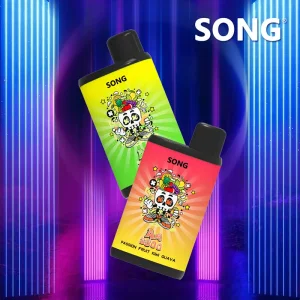
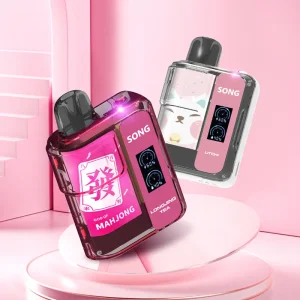

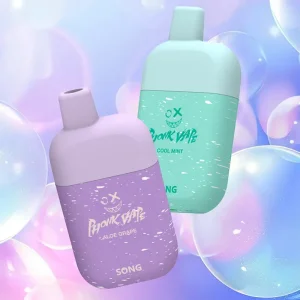
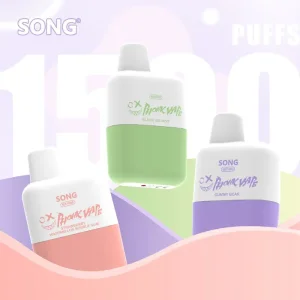
A rigorous examination of shifting consumer demands, supply chain consolidations, and technical standardizations defining modern vape manufacturing.
The global electronic nicotine delivery systems (ENDS) market has transitioned aggressively from short-lifecycle 600-puff hardware to high-capacity devices ranging from 6,000 to over 20,000 puffs. Driven by consumer preference for unit-cost efficiency and extended longevity, original equipment manufacturers (OEMs) must re-engineer thermal control and liquid management systems to avoid premature burnt notes or voltage degradation.
Sustaining chemical flavor consistency across thousands of heating cycles requires ultra-pure synthetic nicotine salts and thermal-resistant carrier solvents (VG/PG matrix). OEM partners face the challenge of matching aerosol particle size distributions throughout the device's lifespan, preventing flavor decay caused by long-term coil carbolization and residual thermal stress.
Compliance paradigms such as the EU Tobacco Products Directive (TPD), the US FDA PMTA pathways, and Middle Eastern ESMA standards require traceable raw materials, emission toxicological screening, and tamper-evident designs. OEMs must maintain ISO 9001 and ISO 13485 cleanroom environments to satisfy stringent cross-border custom audits and health authority mandates.
Executive Procurement Directive: When evaluating OEM/ODM puff manufacturers, procurement teams must look past superficial casing designs. The decisive factors lie in atomization efficiency curves, internal battery C-rate stability, chemical migration safety testing of e-liquid reservoirs, and automated seal integration to combat atmospheric pressure changes during air freight transport.
Inside the engineering stack: mesh coil thermodynamics, intelligent MCU power regulation, and zero-leakage fluid dynamics.
Modern high-puff devices rely on precision-etched FeCrAl (Iron-Chromium-Aluminum) or NiCr mesh structures. By maximizing heating surface area while minimizing thermal mass, mesh coils achieve rapid ramp-up speeds (<0.001 seconds) at lower wattages. Dual-mesh configurations allow alternating firing patterns, effectively halving the thermal wear per coil unit and extending operational life up to 20,000 puffs without flavor degradation.
Integrating 8-bit or 32-bit Microcontroller Units (MCUs) enables regulated power output curves, replacing erratic unregulated direct-voltage discharge. Built-in battery management systems (BMS) provide real-time monitoring of pure Cobalt lithium-ion battery cells (ranging from 550mAh to 1100mAh with Type-C fast charging). Features include over-charge protection, short-circuit shutdown, dry-burn detection, and low-voltage cutoff.
E-liquid leakage remains a top consumer friction point. Professional OEM designs implement multi-layer silicone gaskets, oil-coil separation (OCS) mechanisms, and independent condensation collection chambers. Medical-grade PCTG (Poly Cyclohexylenedimethylene Terephthalate Glycol) polymer tanks prevent chemical leeching and resist acidic flavor concentrates over extended storage cycles.
| Architecture Feature | Legacy Disposable Vapes | SONG Next-Gen OEM Standard | Enterprise Benefit |
|---|---|---|---|
| Heating Element | Single Round Wire Wicking Coil | Precision Dual Mesh Matrix (0.6Ω - 1.0Ω) | +300% surface area, instant vapor production |
| Voltage Output | Unregulated Direct Pass-Through | Constant Smart Boost Buck-Boost Chipset | Identical cloud volume from 100% to 1% battery |
| E-Liquid Retention | Basic Synthetic Cotton Storage | Multi-Layer Organic Cotton + PCTG Reservoir | Zero dry hits, pure flavor preservation |
| Telemetry / UI | Single Bottom LED Indicator | OLED/TFT Real-Time Liquid & Battery Display | Enhanced user trust & premium shelf positioning |
| Battery Chemistry | Ternary Lithium (High self-discharge) | Pure Cobalt Lithium Polymer Cell (Type-C) | Longer shelf life, fast 30-min recharge cycle |
From molecular e-liquid formulation to custom industrial tooling, explore our structured 5-stage procurement pathway.
Collaborative alignment on target regions (EU, US, LATAM, SEA, Middle East), specific regulatory constraints (TPD 2ml vs Global 10ml+), target puff count, desired nicotine strength (0% to 5% Nic Salt), and ergonomics.
In-house flavorists synthesize customized aromatic profiles using GC-MS analytical chemistry. In parallel, CAD engineers construct rapid 3D SLA prototypes for hand-feel evaluation and airflow intake calibration.
Pre-production golden samples undergo simulated high-altitude pressure testing, thermal shock testing (-20°C to 60°C), heavy metal migration assays, and drop-impact resistance tests before mass production authorization.
Mass assembly occurs inside dust-free ISO Class 8 cleanrooms utilizing automated e-liquid filling machinery, visual CCD laser inspection for alignment, and ultrasonic welding for leak-tight casing assembly.
Navigating cross-border legal entry requirements with robust technical documentation and international safety standards.
For European buyers, compliance under Article 20 of the Tobacco Products Directive (2014/40/EU) requires rigorous maximum limits (2ml tank volume, 20mg/ml nicotine concentration), child-resistant design, and submission of full EU-CEG notification dossiers backed by emissions testing for carbonyl compounds and heavy metals.
Entering North American markets requires compliance with Premarket Tobacco Product Applications (PMTA) supported by comprehensive HPHC (Harmful and Potentially Harmful Constituents) reporting. Electrical safety is verified via UL 8139 certification covering battery cells, charging circuitry, and thermal runaway prevention.
All battery shipment packaging adheres to UN38.3 transport standards, MSDS (Material Safety Data Sheets), and RoHS hazardous material restrictions. Furthermore, private label products feature dual-layer encrypted QR verification codes to combat black-market counterfeiting and protect brand integrity.
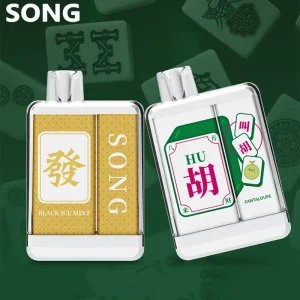
Explore specialized flavor series, high-capacity tanks, and compact designs built to expand your market footprint.
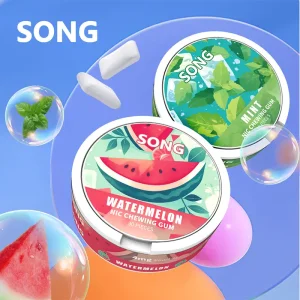

Addressing core concerns around manufacturing lead times, customization thresholds, quality assurance, and intellectual property protection.